
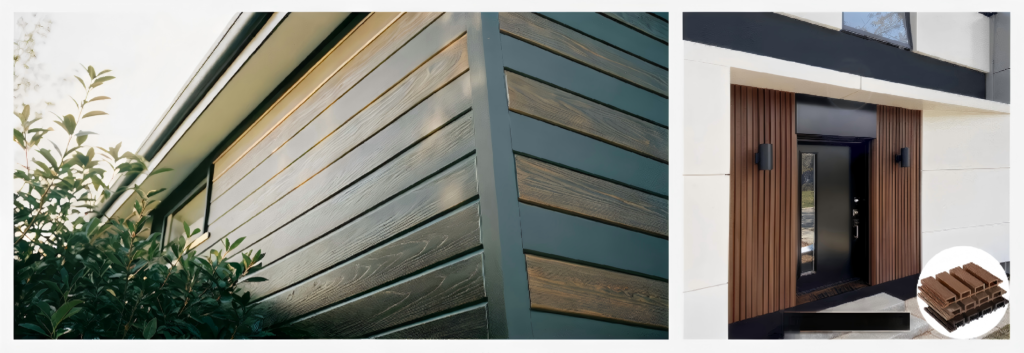
In the evolving world of interior design, the choice between WPC (Wood Plastic Composite) and PVC (Polyvinyl Chloride) often defines the balance between luxury and budget. While PVC offers a lightweight, waterproof, and cost-effective solution, WPC stands in a league of its own—blending the organic soul of wood with the resilience of modern polymers.
- The Aesthetic Edge: Nature Meets Technology
WPC wall panels are the designer’s dream for their chameleon-like versatility. Unlike the uniform, purely synthetic look of PVC, WPC captures the authentic grain and warmth of timber.
• Limitless Customization: From rustic cabins to sleek, minimalist lofts, WPC adapts. Manufacturers utilize advanced embossing to create lifelike textures that even experts struggle to distinguish from real wood.
• 3D & Fluted Designs: Beyond flat surfaces, WPC excels in creating fluted panels and 3D curved geometries. These add depth and architectural drama to living rooms and commercial lobbies alike.
• Premium Finishes: High-quality coatings ensure the surface resists scratches and UV fading, keeping colors rich whether installed in a sunny café or a cozy den. - Unmatched Durability & Performance
Why choose WPC for your home or business? It’s an investment in permanence.
• The “Forever” Material: The hybrid wood-plastic core refuses to warp, crack, or rot like traditional timber. It holds its shape even when the temperature swings.
• Moisture Immunity: With a moisture content of just ~0.5%, WPC laughs off humidity. It is the gold standard for bathrooms, kitchens, and outdoor facades where mold and mildew fear to tread.
• Sound & Heat Insulation: The dense composition naturally dampens noise and helps stabilize indoor temperatures, adding a layer of comfort that thin PVC cannot match. - Sustainability: The Green Choice
For the eco-conscious homeowner, WPC is the clear winner. By incorporating recycled wood fibers and plastics, these panels reduce landfill waste and decrease the demand for virgin timber. It’s a stylish way to support a circular economy without sacrificing luxury. - Market Trends: Why WPC is Surging
The industry is shifting. While PVC remains a staple for tight budgets, the demand for WPC is skyrocketing in both residential and commercial sectors. Innovations in fire-retardant technology and hyper-realistic textures are making WPC the go-to for architects who refuse to compromise on safety or style.
Quick Comparison: WPC vs. PVC
| Feature | WPC Wall Panel | PVC Wall Panel |
| Composition | Wood fibers + Thermoplastics (Recyclable) | 100% Synthetic Plastic |
| Aesthetics | Authentic wood grain, heavy & solid feel | Uniform plastic look, lightweight |
| Durability | High impact resistance, dimensionally stable | Prone to denting, can warp in heat |
| Eco-Factor | Eco-friendly (often uses recycled content) | Less eco-friendly |
| Best For | Premium homes, hotels, exterior cladding | Temporary setups, low-budget projects |
FAQ: Your Questions Answered
Q: Is WPC really better than PVC for homes?
A: If you prioritize a luxurious, wood-like feel and long-term durability, yes. WPC is heavier, stronger, and offers better insulation. PVC is best if you need the absolute cheapest option and don’t mind the “plastic” look.
Q: Can WPC panels be used outdoors?
A: Absolutely. Thanks to their zero moisture absorption and UV-resistant coatings, WPC panels are engineered to withstand rain, sun, and fluctuating temperatures without rotting or fading.