
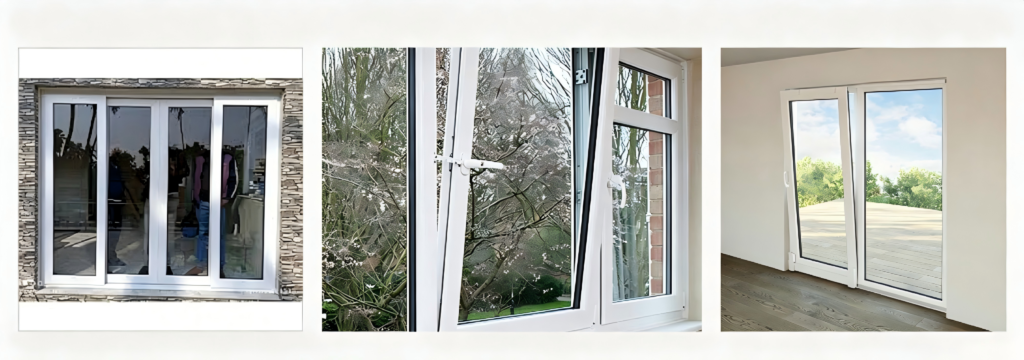
The vast array of window designs available today means that each style carries distinct engineering trade-offs, dictating their ideal environment. Making an informed decision is pivotal—not just for aesthetics, but for enhancing the functional quality of your living space. Here is a breakdown of the most prevalent window types to help you choose wisely.
- Sliding Windows
Celebrated for maximizing glass area, sliding windows feature panels that glide horizontally to control airflow and daylight. They are superb for framing panoramic views and inviting natural light. However, the inherent design results in slightly compromised seals compared to crank-operated windows. Consequently, they are best deployed in sunrooms, porches, or balconies where extreme insulation is less critical. - Tilt & Turn Windows
Representing a modern evolution in residential architecture, these European-style windows offer dual functionality. They provide an airtight seal when closed, offering superior protection against the elements. The only caveat is their swing arc; the sash opens inward, requiring clear interior space. If your priority is thermal efficiency and noise reduction, this is the undisputed champion, provided your interior layout accommodates the clearance. - Tilt & Slide Windows
As a cutting-edge innovation, tilt & slide windows combine the sealing benefits of tilt & turn systems with a space-saving slide. While they deliver excellent airtightness, they are currently positioned at a higher price point due to their novelty. Additionally, the complex hardware mechanisms may require more frequent maintenance. These are ideally suited for rooms with deep windowsills where a traditional swing is impractical.
The Verdict
Ultimately, the optimal window is a balance of environmental demands and personal lifestyle. Aligning the window’s mechanical strengths with your specific room requirements is the cornerstone of a comfortable, energy-efficient home.