
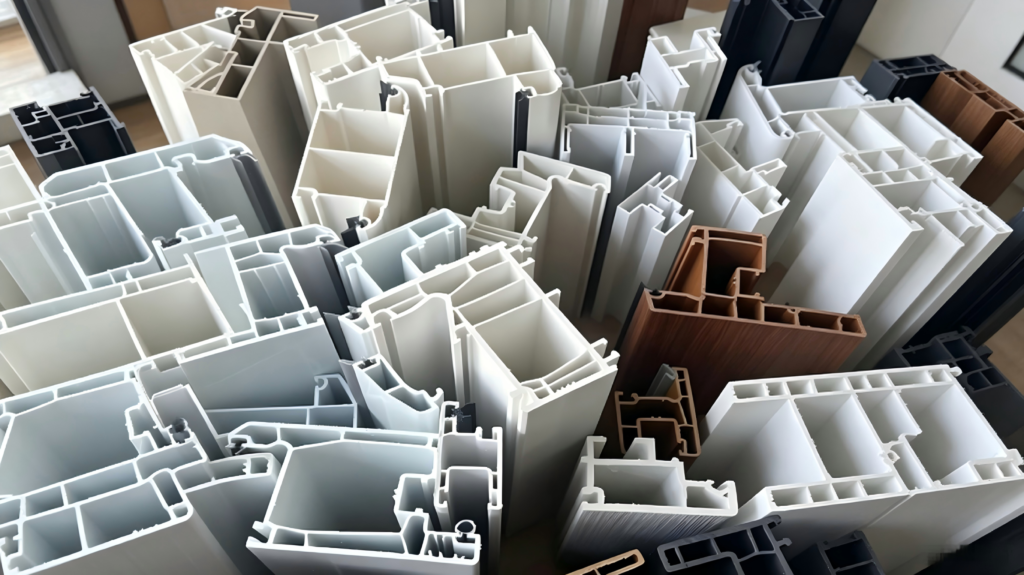
What is PVC Used For?
Polyvinyl chloride (PVC) is one of the world’s most widely produced synthetic polymers. It’s a top choice for countless applications due to its unique combination of durability, hygiene, and versatility.
Key uses include:
Finishing & Protection: Creates clean edges on wall corners, doors, windows, and stairs while protecting against damage and impacts.
Hygiene-Critical Environments: Naturally resists fungi and bacteria, making it ideal for hospitals and clinics. Used as wall protectors, angle brackets, and skirting boards.
Industrial Applications: Perfect for label holders, checkout profiles, and refrigeration components.
DIY Projects: Simple to work with for home repairs and constructions like chairs, benches, and curtain supports.
Where is PVC Used? (3 Main Sectors)
1. Construction
Ceilings, wall protectors, protective sheeting, door seals, linear drains, skirting boards.
2. Industry & Services
Label holders, refrigeration profiles, checkout profiles.
3. Hydroponics
Germination tables and accessories.
Advantages of PVC
PVC offers more than just resistance to fungi, bacteria, chemicals, and weather (sun, rain, temperature changes). It also never yellows over time.
Key benefits include:
Versatility: Adapts to countless forms and functions.
Durability & Low Maintenance: Lasts for years with minimal care.
Economy: Cost-effective compared to many alternatives.
Fire Safety: Meets safety standards for flame resistance.
Thermal & Acoustic Insulation: Helps reduce noise and temperature transfer.
Sustainability: Long service life reduces replacement waste.
Lightweight: Easy to transport and install.
Types of PVC
While made from the same raw material, expanded and semi-rigid PVC have very different characteristics and uses.
Semi-Rigid PVC
A blend of rigid and flexible PVC known for its thin thickness, allowing highly detailed molding. Available in multiple colors with either matte or glossy finishes.
Common uses: Label holders, displays, price holders, exhibitors, forms, and trays.